Reception:
+48 58 674 15 93
1. Diagnosis
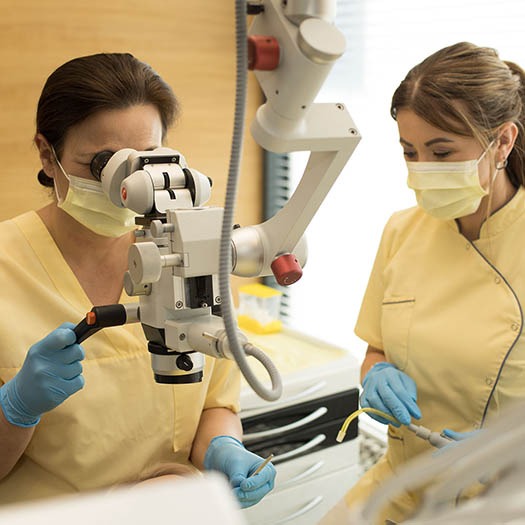
At this stage, an X-ray is taken to assess key features such as the number of roots (some teeth have up to four), their shape, width, and the path of the canals inside each root.
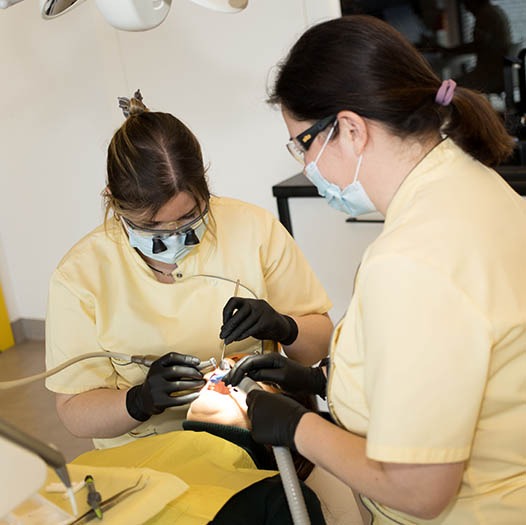
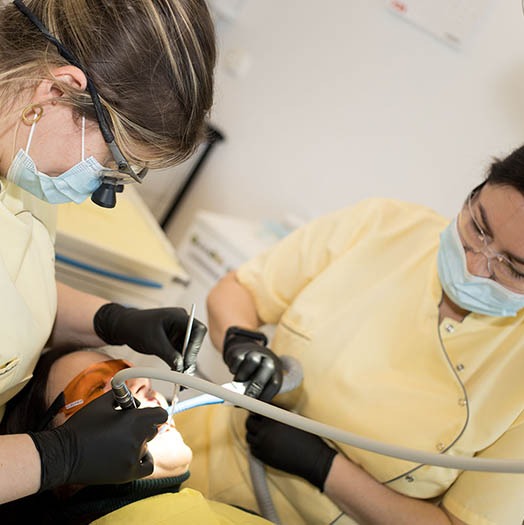
2. Cleaning of the tooth crown and infected canals
The crown of the tooth is cleaned of carious bacteria, and the tooth walls are prepared.
The cleaning of infected root canals is done in three steps:
a. Removal of the infected pulp from each canal;
b. Scraping bacteria from the canal walls using appropriate endodontic instruments;
c. Chemical disinfection to eliminate any bacteria that were not removed mechanically.
3. Filling the cleaned root canals
The empty, thoroughly cleaned root canals are filled with a special biocompatible material. This ensures a tight seal and provides effective protection against future bacterial infiltration.
4. Tooth restoration
The final (restorative) stage involves rebuilding the tooth. The goal is to restore its anatomical shape and functional role in the bite through:
a. filling (for small crown losses);
b. inlays or onlays (for larger defects);
c. prosthetic crowns (in cases of extensive damage).


