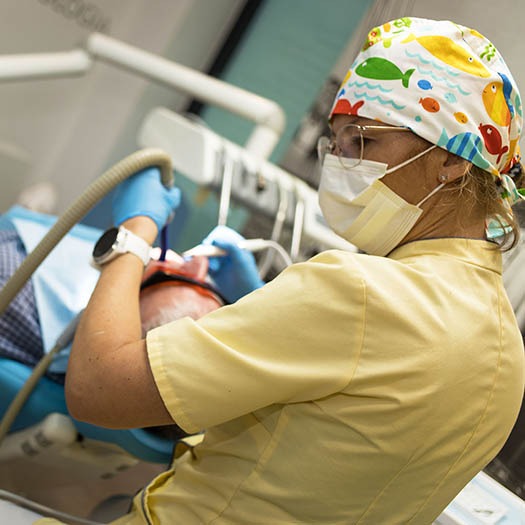
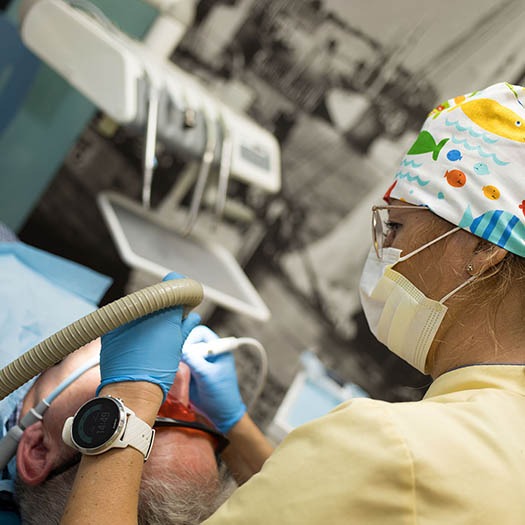
The dental hygienist supervises and evaluates the results of treatment. Within a more specific medical and oral hygiene scope, they may assist with the following procedures:
- Scaling – this is one of the methods used to remove plaque or dental tartar. There are several ways to do this, ranging from mechanical to ultrasonic and laser techniques. Specialized tools are also used, such as ultrasonic or laser dental scalers. During the procedure, ultrasonic waves break down plaque and tartar deposits while simultaneously polishing the tooth surface. The laser works similarly; both procedures are painless.
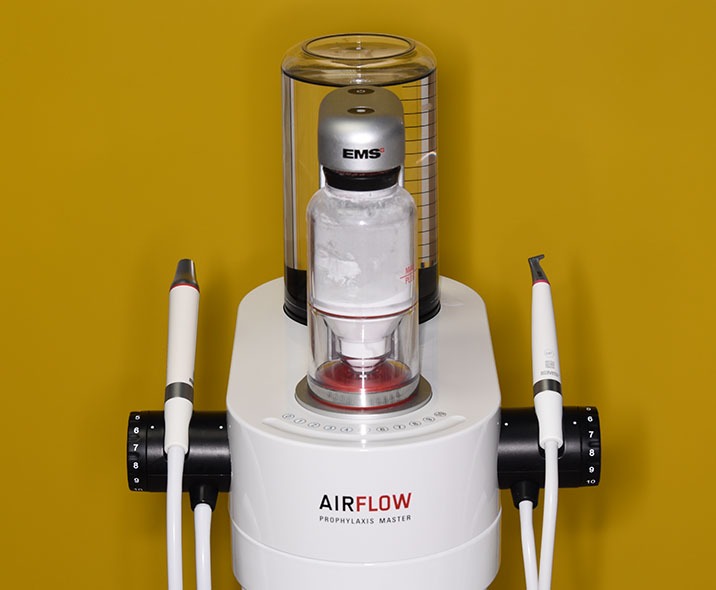
- Air polishing (Sandblasting) – this procedure removes dental plaque and stains (such as those from coffee, tea, or smoking) using an air polisher. The device uses a special dental powder (a very fine abrasive) to clean the teeth. This treatment improves the appearance of teeth but does not remove tartar.
- Fluoride treatment – also known as fluoride varnishing, this involves applying a special fluoride-containing varnish to the surface of the teeth. This strengthens the teeth and makes them more resistant to bacterial action.
- Sealants (Fissure sealing) – this involves filling the grooves on the surface of premolars and molars (both primary and permanent teeth) with a fissure sealant to prevent bacteria and food debris from accumulating. These grooves are difficult to clean with regular brushing, and poor hygiene in these areas can lead to tooth decay. Sealants are applied to healthy teeth.